President Goodluck Jonathan and Prof Attahiru Jega
Chairman of the Independent National Electoral Commission, INEC, Professor Attahiru Jega, has promised that every eligible Nigerian would be provided with his or her Permanent Voters’ Card, PVC, before the general elections next month.
Jega was responding to a request by President Goodluck Jonathan for INEC to ensure that every Nigerian, who registered to vote was provided with PVC to enable him or her vote in the elections.
Meanwhile, the House of Representatives Committee on Electoral Matters has invited the INEC and other stakeholders to deliberate on the country’s readiness to conduct 2015 general elections.
Jonathan spoke while swearing in a new National INEC Commissioner representing Oyo State, Prof. Akinola Murtala Salau, saying no Nigerian should be disenfranchised because of his/her inability to get the PVC.
The President said the level of interest shown by Nigerians from all walks of life in getting their PVC was an indication that confidence was being restored in the electoral process.
He said: “Nigerians are getting worried over whether INEC can actually conduct free and fair elections because of the (scarcity of the) PVC. Talking about the PVC, even some governors are complaining that they are yet to obtain their own. If governors are yet to get their voters cards, of course that means that so many Nigerians are yet to get theirs and people are a bit worried.
“But to me I am quite pleased, not pleased in the negative sense, but because of the awareness that has come; that Nigerians want to have their voters cards.
“Before 2011, no Nigerian complained about voters card and that is why when some politicians talk, I just laugh. Nobody cared.
“Some people came on board and sanitised the electoral process but others want to take the glory. We have to commend ourselves, that today ordinary Nigerians, businessmen, religious leaders are complaining. Nobody talked about that before 2011. So, people should commend us and I am pleased that people are talking about voters cards.
“The chairman of INEC luckily is here. All Nigerians must get their voters cards. We cannot conduct an election where some people will not have the right to vote. People must decide who rules them at all levels not just about presidential elections, at the lowest level of elections conducted by INEC.
“All Nigerians must vote and INEC must do everything possible to make sure that all Nigerians have their voters card because we cannot have a situation where some Nigerians will not vote that day.”
INEC should remain absolutely neutral
He then asked INEC to remain “absolutely neutral” to guarantee a credible election, adding that only people of impeccable character should work in the electoral body.
Jonathan stressed that only people of of impeccable character should work with INEC, adding that the choice of Professor Salau was because of his pedigree.
He said: “The INEC is supposed to be absolutely neutral in its work in order to conduct credible election because the whole world is watching INEC. You (Professor Salau) are coming into INEC at a very critical time with about 40 days to elections. So you are coming at a critical time and I believe that the chairman needs your services. I believe Prof. Jega would even want to double the number of staff if he has the resources, to make sure that they can cope.
Speaking with State House correspondents after the swearing-in, Professor Jega promised that “every registered Nigerian will get his PVC before the election, God willing.”
Reps c’ttee invites INEC, other stakeholders
“The purpose of this event is to underscore the current burning issues on 2015 general elections and to proffer necessary solutions,” the notice by the House Committee Chairman, Jerry Manwe stated yesterday.
The invitation notice was dated January 8 and signed by the acting committee clerk, Barr. Oscar Okoro.
Manwe said that the stakeholder would address: INEC’s level of preparedness for February’s general election as well as funding, security issues, franchise of internally displaced persons and other sundry issues arising from concerns by Nigerians.
The Presidential flag bearer of the All Progressives Congress (APC), Gen. Mohammadu Buhari, has said that insecurity and corruption are the major problems militating against the development of Nigeria as a nation and promised to tackle the menace, if elected president on Feb. 14.
Buhari said this when he paid a courtesy visit to Gov. Rochas Okorocha of Imo at the Government House, Owerri on Wednesday.
He called on the Igbos to support APC, saying that one of the objectives of his government, if elected, was to secure the country and efficiently manage it.
He said that, if voted into power, his administration would decisively deal with terrorism, kidnapping and corruption at all levels.
On economy, Buhari decried the alarming rate of inflation in the country and wondered how local businesses could survive with the rate of exchange of Naira to Dollar.
He, therefore, promised to improve on the economy.
“In 1984 as the military head of state, I refused to devalue the Naira, refused to remove subsidy on petroleum products.
“We equally made an undertaken to meet our obligation on foreign debt – medium and long term. All these we did within the period we were in power.”
Earlier, Gov. Okorocha lauded Gen. Buhari for his zero tolerance to corruption as well as his vision for Nigeria.
He requested, among other things, that a fair share of political positions be allotted to the South-East as well as creation of an additional state to make for equity and fairness among the six geo-political zones of the country.
He also requested for the upgrading of the Sam Mbakwe Cargo Airport to an International Airport as well as the rehabilitation of Enugu – Onitsha Road, Enugu – Port Harcourt Road, and Aba –Ikot Ekpene Road, among others, if elected.
“My General, I ask for nothing but these few things and I know you can do it. But for the votes, my people will give you their vote,” he said.
APC Chairman, Chief John Oyegun, Gov. Rotimi Amaechi of Rivers State, Sen. Chris Ngige and other national leaders of the party accompanied Buhari during the visit. (NAN)
The Department of State Services, DSS, has accused the All Progressives Congress, APC, of an elaborate plot to hack into the voters registration data base of the Independent National Electoral Commission, INEC. It alleged that the purpose was to clone voters and party membership cards to match those in the data base.
The DSS claim was based on what it allegedly recovered from the invasion of the APC data centre in Lagos on November 22, 2014.
The charges were immediately rebuffed, by the APC which described the findings as hogwash, a “disservice to Nigeria and an embarrassment to all intelligence-gathering organizations around the world.”
Revealing the alleged findings from the outcome of its investigations, DSS spokesperson Marilyn Ogar, at a press conference in Abuja, said its operatives recovered a computer hard drive containing a video of 21 hacking tutorials during the raids on the APC centre located at 10 Bola Ajibola Street, Ikeja, Lagos State.
Ogar, a deputy director, Public Relations in the DSS, said the tutorial video focused on how to become a hacker and steps to take to avoid detection in the process of hacking web servers.
Ogar also alleged that the video explained how to hack into the systems of media houses, with the purpose of broadcasting fake stories or headlines.
She said the DSS also discovered that the APC registered under-aged persons including several infants and babies, foreigners and security personnel as members of the party.
What we discovered —DSS
She said the DSS received actionable information that a building located at No. 10, Bola Ajibola Street, Ikeja, Lagos, was being used for cloning of INEC Permanent Voters Cards (PVCs) by some unscrupulous persons with intent to hack into INEC database, corrupt it and replace same with their own data.
“And that upon receiving the said report, the Service immediately took appropriate steps to investigate same by first seeking and obtaining a search warrant as required by law. This is contrary to claims by the APC that the building was accessed illegally.
“On arriving at the building at No. 10, Bola Ajibola Street, Ikeja, Lagos, officers of this Service found that the building did not have the signpost, banner or flag of any company or political party.
“In the course of investigation, the following discoveries were made: A temporary Voters Card; Permanent Voters Card; one of the hard drives recovered from the building contained a video of twenty-one (21) hacking tutorials.
“The tutorial video focused on “how to become a hacker and steps to take to avoid detection in the process of hacking web servers, steps and procedures of system hacking, passwords cracking, decrypting, escalating access privileges, and creating backdoors to servers.
“It also explicitly explained how to evade security of databases such as Intrusion Detection Systems (IDS), firewalls, and other measures put in place to deter hackers. The video outlined ways to identify vulnerabilities in systems and how to surreptitiously drop a USB flash drive in a target establishment, which when plugged into any computer, transmits malicious codes enough to gain access into and compromise the entire system of the target organization; and finally, the video explains how to hack into the systems of media houses, with the aim of broadcasting fake stories or headlines,” she said.
Registration of infants, security personnel
Ogar said further: “It was also discovered that the APC registered under-aged persons including several infants and babies as members of the party. We know that Article 9.1 of the APC Party Constitution expressly says: “Membership of the party shall be open to any citizen of Nigeria who has attained the age of eighteen (18) years and accepts the aims and objectives of the Party…”
According to her, the APC registered several security personnel from the Nigerian Army (NA), the Nigeria Police Force (NPF), Nigeria Customs Service (NCS), Nigerian Security and Civil Defence Corps (NSCDC), Federal Road Safety Corps (FRSC) among others, in their uniforms as members of the party.
“Furthermore the APC had multiple registrations of individuals in multiples of 16, 12, and 10; several foreigners were also registered as its members. Also, the APC filled forms without passport photographs, and have books containing names of people with their phone numbers.
“Equally discovered were several envelopes containing passport photographs of various individuals. From the foregoing, that we suspect there was an elaborate and well articulated plan to inflate the Party’s membership data as well as hack into INEC’s voter registration database through the creation of party membership forms and cards to match INEC’s voters registers across the country.”
Allegation is hogwash, embarrassing to intelligence services — APC
Responding last night, the APC in a statement issued by its spokesman, Alhaji Lai Mohammed said the development was reflective of the synergy between the security service and the Peoples Democratic Party, PDP, to rubbish the opposition party ahead of the forthcoming elections.
Describing the allegations as disingenuous, flimsy, premeditated, partisan and an irritation, the party said: ‘’First the DSS and the PDP said the APC was cloning Permanent Voters Cards at the raided office, without a shred of evidence. Now, after a ‘painstaking’ investigation, the DSS has found out that the APC was only planning to inflate its membership data and then hack into INEC’s database. And this is the outcome of its massive, months-long investigations?
“This would have been funny if it were not from a primary domestic intelligence agency saddled with a great responsibility. Can this wishy-washy report stand any serious scrutiny? Can any serious intelligence gathering agency anywhere else in the world take this report seriously? With this kind of findings, one can now understand why Boko Haram has continued to strike at times and places of its own choosing without any prior knowledge by our all-powerful DSS.
“Even the presentation of the report by a poorly-trained and highly-politicized spokesperson of the DSS worsened the so-called findings. Why would the spokesperson of a national agency sound like a megaphone for the ruling party, freely castigating the opposition spokesman and a number of uninformed members of the public? Why does she have to go personal in presenting a report that supposedly is in the national interest?
“We have always warned that our democracy is in clear and present danger, not just from desperate politicians, but also from institutions of state that have compromised in their roles and resorted to crass lawlessness. The DSS’ ‘findings’ today have given us another reason to repeat this warning.
“While we are willing to meet the DSS in court, we can confidently say that the ‘confessions’ extracted from the arrested persons, after they were subjected to incredible acts of torture, cannot even stand in any court of law,” APC said.
The party recalled that in its statement of December 5, 2014, it accused the DSS of resorting to the use of torture to obtain forced confessions from those who were arrested during the first raid on the party’s Data Centre in Ikeja.
“In that statement, we called the action of the DSS a contravention of the UN Convention against Torture to which Nigeria is a signatory and a violation of the citizens’ fundamental human rights.
“We also said the DSS shackled the hands and legs of those arrested and blindfolded them while they were being taken to Abuja. The arrested persons remained in chains even at the dark detention cell where they were made to sleep on the bare floor for the 10 days they were detained illegally.
“Guns were pointed at their heads by DSS personnel who threatened to shoot them, while a pregnant woman among those who were arrested was denied access to her drugs even when she started bleeding due to the torture to which she was subjected by the DSS. Now the DSS has confirmed what we said in that press statement. Is anyone still surprised at the action of countries that are distancing themselves from Nigeria over human rights violations?” it queried.
APC said the impending release of the ‘great findings’ by the DSS after its world class investigations must have been the reason why the agency recently threatened it would arrest any politician who makes inciting comments, adding: “Apparently the DSS needed to silence all so that no one will dare criticize its earth-shaking ‘findings’.”
It confirms our claim— PDP
In its reaction to the development, the PDP said the revelation was a confirmation of what it claimed as the sinister plan of the APC to compromise the electoral system.
The party said: “When we alerted Nigerians that the APC is on a sinister mission against this country, some people dismissed us as crying wolf and playing to the gallery. Now that they have been exposed, the world can see that the APC is indeed a party of criminals in desperate quest for power.
“Everyone now knows on what strength a party which lacks genuine followership among the people has been boasting that it will emerge victorious in the elections with threats of violence if it loses.”
“It is shocking that while other parties are working hard to win votes, the APC was busy procuring hacking equipment and training their members on how to subvert the will of the people and steal their mandate. This is indeed a slap in the face of Nigerians and the worst assault on our democracy.”
Timothy Ray Brown was the first man cured of HIV. But he initially opted against the stem cell transplant that would later make history, he reveals in a new essay.
The first man cured of HIV, formerly known only as the “Berlin Patient,” released a first-person account Tuesday of his breakthrough stem cell transplant. Timothy Ray Brown’s essay, which was published in the
journal Aids Research and Human Retroviruses, gives an in-depth look at the events surrounding his widely reported 2007 transplant.
Brown was first diagnosed with HIV in 1995 while attending college in Berlin. In 2006, he was so tired during a bike ride that he had to stop midway; the extreme exhaustion prompted him to go to the doctor’s office, where he was diagnosed with leukemia.
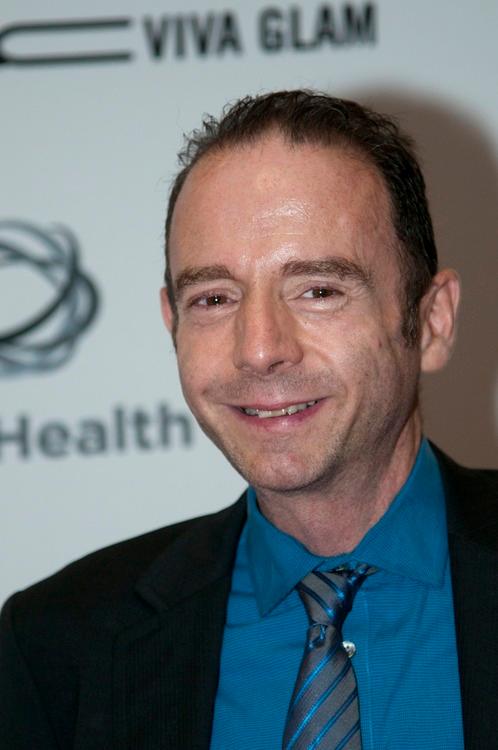
Now healthy and HIV-free, Timothy Ray Brown advocates for HIV research and heads the Timothy Ray Foundation. (Photo: Patsy Lynch)
Pairing up with the doctor who would later cure him of HIV was pure luck.
“[My boyfriend and I] chose one of the Berlin university hospitals near my apartment,” Brown writes in the article. His partner called the hospital and reached Dr. Gero Huetter, who said, “Send him in.”
Dr. Huetter treated Brown with three rounds of chemotherapy. The physician also looked for matches for a stem-cell transplant, in case Brown needed one. “Many patients do not have any matches; I had many matches, 267,” Brown writes. Since there were so many options, Dr. Huetter looked for a match with a specific cell mutation called CCR5 Delta 32, which was known to make a person with it virtually immune to HIV infection.
After going through 60 potential donors, Dr. Huetter finally found a match with the mutation.
One revelation Brown offers: Neither he nor Dr. Huetter had any idea that they were onto a possible HIV breakthrough. In fact, Brown opted against the stem-cell transplant at first. “I talked with friends, family, and a transplant professor in Dresden,” he says. “I said ‘no’ to the transplant, thinking that it would not be necessary were the leukemia to remain in remission because I could continue to take my antiretroviral medication indefinitely. I did not need to be a guinea pig and risk my life receiving a transplant that might kill me. The survival rate for stem-cell transplants is not great; normally it is about 50/50.”
But after a short remission, the leukemia came back in 2007, and the transplant was necessary to save Brown’s life. He stopped taking his antiretroviral medication, and after three months, blood tests revealed that he no longer had HIV in his blood. “I thrived until the end of the year,” he says. “I was able to go back to work and return to the gym.” A second stem-cell transplant resulted in a much longer and harsher recovery, but he remained HIV-free.
In 2013, researchers attempted to replicate Brown’s results in a baby from Minnesota. The boy, known as “Patient 2,” received a cord blood transplant with the same mutation as Brown’s donor. In July 2014, however, scientists discovered significant levels of HIV in the boy’s blood, so researchers are still searching to develop a functional cure.
Now, 20 years after he was first diagnosed with the virus, Brown has dedicated his life to that search. He founded the Timothy Ray Foundation, which is part of the World AIDS Institute, in 2012, and he continues to work with scientists and institutions researching the disease. Brown concludes, “I will not stop until HIV is cured!”
One man sought in the deadly shooting at a French satirical paper has turned himself in, and police hunted Thursday for two heavily armed men with possible links to al-Qaida in the military-style, methodical killing of 12 people at the office of a satirical newspaper that caricatured the Prophet Muhammad.
President Francois Hollande, visiting the scene of France's deadliest such attack in more than half a century, called the assault on the weekly newspaper Charlie Hebdo "an act of exceptional barbarism."
France raised its terror alert system to the maximum — Attack Alert — and bolstered security with more than 800 extra soldiers to guard media offices, places of worship, transport and other sensitive areas. Fears had been running high in France and elsewhere in Europe that jihadis trained in warfare abroad would stage attacks at home.
French brothers Said and Cherif Kouachi, in their early 30s, should be considered armed and dangerous, according to a police bulletin released early Thursday. Mourad Hamyd, 18, surrendered at a police station in Charleville-Mezieres, a small town in France's eastern Champagne region, said Paris prosecutor's spokeswoman Agnes Thibault-Lecuivre. She did not offer details on Hamyd's relationship to the men, but said he turned himself in because he heard his name on the news in connection with the attack.
By then, heavily armed police had already moved into the nearby city of Reims, searching for the suspects without success. Video from BFM-TV showed police dressed in white apparently taking samples inside an apartment. It was not immediately clear who lived there.
One police official, speaking on condition of anonymity because the investigation was ongoing, said they were linked to a Yemeni terrorist network, and Cedric Le Bechec, a witness who encountered the escaping gunmen, quoted the attackers as saying: "You can tell the media that it's al-Qaida in Yemen."
Cherif Kouachi, who is now 32, was sentenced to 18 months in prison after being convicted of terrorism charges in 2008 for helping funnel fighters to Iraq's insurgency. He said he was outraged at the torture of Iraqi inmates at the U.S. prison at Abu Ghraib near Baghdad.
The masked, black-clad men with assault rifles stormed the offices near Paris' Bastille monument in the Wednesday noontime attack on the publication, which had long drawn condemnation and threats — it was firebombed in 2011 — for its depictions of Islam, although it also satirized other religions and political figures.
Shouting "Allahu akbar!" as they fired, the men used fluent, unaccented French as they called out the names of specific employees.
Artist Corinne Rey told the French newspaper L'Humanite that she punched in the security code to the Charlie Hebdo offices after she and her young daughter were "brutally threatened" by the gunmen.
People gather in solidarity of the victims of a terror attack against a satirical newspaper, in Pari …
Eight journalists, two police officers, a maintenance worker and a visitor were killed, said prosecutor Francois Molins. He said 11 people were wounded — four of them seriously.
After fleeing, the attackers collided with another vehicle, then carjacked another car before disappearing in broad daylight, Molins said.
Among the dead: the paper's editor, Stephane Charbonnier.
The staff was in an editorial meeting and the gunmen headed straight for Charbonnier — widely known by his pen name Charb — killing him and his police bodyguard first, said Christophe Crepin, a police union spokesman.
Rey said the assault "lasted five minutes. I hid under a desk."
Two gunmen strolled out to a black car waiting below, one of them calmly shooting a wounded police officer in the head as he writhed on the ground, according to video and a man who watched in fear from his home across the street.
The witness, who refused to allow his name to be used because he feared for his safety, said the attackers were so methodical he first thought they were members of France's elite anti-terrorism forces. Then they fired on the officer.
"They knew exactly what they had to do and exactly where to shoot. While one kept watch and checked that the traffic was good for them, the other one delivered the final coup de grace," he said.
"Hey! We avenged the Prophet Muhammad! We killed Charlie Hebdo," one of the men shouted in French, according to video shot from a nearby building.
The other dead were identified as cartoonists Georges Wolinski and Berbard Verlhac, better known as Tignous, and Jean Cabut, known as "Cabu." Also killed was Bernard Maris, an economist who was a contributor to the newspaper and was heard regularly on French radio.
Le Bechec, the witness who encountered the gunmen in another part of Paris, described on his Facebook page seeing two men "get out of a bullet-ridden car with a rocket-launcher in hand, eject an old guy from his car and calmly say hi to the public, saying 'you can tell the media that it's al-Qaida in Yemen.'"
Charlie Hebdo has been repeatedly threatened for its caricatures of the Prophet Muhammad and other sketches. One cartoon, released in this week's issue and titled "Still No Attacks in France," had a caricature of a jihadi fighter saying "Just wait — we have until the end of January to present our New Year's wishes." Charb was the artist.
In a somber address to the nation Wednesday night, Hollande pledged to hunt down the killers, and pleaded with his compatriots to come together in a time of insecurity and suspicion.
"Let us unite, and we will win," he said. "Vive la France!"
Thousands of people later jammed Republique Square near the site of the shooting to honor the victims, waving pens and papers reading "Je suis Charlie" — "I am Charlie." Similar rallies were held in London's Trafalgar Square as well as Madrid, Barcelona, Berlin and Brussels.
"This is the darkest day of the history of the French press," said Christophe DeLoire of Reporters Without Borders.
Both al-Qaida and the Islamic State group have repeatedly threatened to attack France, which is conducting airstrikes against extremists in Iraq and fighting Islamic militants in Africa.
During Cherif Kouachi's 2008 trial, he told the court, "I really believed in the idea" of fighting the U.S.-led coalition in Iraq.
In the winter 2014 edition of the al-Qaida magazine Inspire, a so-called chief describing where to use a new bomb said: "Of course the first priority and the main focus should be on America, then the United Kingdom, then France and so on."
In 2013, the magazine specifically threatened Charb and included an article titled "France the Imbecile Invader."
French President Francois Hollande, center, flanked with security forces arrives outside the French …
The attack was condemned by world leaders.
President Barack Obama offered U.S. help in pursuing the gunmen, saying they had attacked freedom of expression. He offered prayers and support for France, which he called "America's oldest ally."
British Prime Minister David Cameron said his country stood united with France,
"We stand squarely for free speech and democracy. These people will never be able to take us off those values," Cameron said in the House of Commons.
Russian President Vladimir Putin also condemned the attack as a "cynical crime," and pledged cooperation in fighting terrorism.
"I think all of Europe is crying today," said Italian Premier Matteo Renzi. "All the free world is crying. All men and women who believe in freedom and reason are crying."
Salman Rushdie, who spent years in hiding after his novel, "The Satanic Verses," drew a death edict from Iran's religious authorities, said all must stand with Charlie Hebdo "to defend the art of satire, which has always been a force for liberty and against tyranny, dishonesty and stupidity."
Mohammed Moussaoui, president of the Union of French mosques, condemned the "hateful act," and urged Muslims and Christians "to intensify their actions to give more strength to this dialogue, to make a united front against extremism."
The Organization of Islamic Cooperation based in Jiddah, Saudi Arabia, which represents 57 Muslim-majority nations, added its condemnation, saying that violence and radicalism were the biggest enemies of Islam and went against all its fundamental principles and values.
A tweet from an al-Qaida representative who communicated Wednesday with The Associated Press said the group was not claiming responsibility for the attack, but called it "inspiring."
Supporters of militant Islamic groups praised it. One self-described Tunisian loyalist of al-Qaida and the Islamic State group tweeted that the attack was well-deserved revenge against France.
The hashtag #JeSuisCharlie was trending as people expressed support for the weekly and for journalistic freedom. The weekly's website collapsed earlier Wednesday but was later restored.
It was the deadliest attack on journalists since 2009, when 32 journalists were killed in an ambush on a political convoy in the southern Philippines.
Philippe Val, one-time Charlie Hebdo chief, raised the possibility of publishing a special edition of the newspaper, saying "a way of speaking has been exterminated."
"We must respond, because we must testify for them," he told RTL radio.
Associated Press writers Lori Hinnant, Philippe Sotto, Samuel Petrequin, Angela Charlton, Sylvie Corbet and John Leicester in Paris; Raphael Satter in London; Sarah el-Deeb in Cairo; Zeina Karam and Diaa Hadid in Beirut; and Aya Batrawy in Dubai, United Arab Emirates, contributed to this story.
Sailor Gutzler, the 7-year-old girl who survived a plane crash, walked a mile through the cold, dark woods to safety and then helped authorities locate the wreckage and remains of her family, may not be done helping investigators.
National Transportation Safety Board investigator Heidi Moats said Sunday that Sailor is "one remarkable young lady," and she might be able to assist them in determining what brought the plane down. It is rare for someone to survive a small plane crash and Moats said they want to talk to Sailor about it.
"Having someone that is a witness (is) always helpful in the investigation, it gives us kind of a story line," Moats said.
It's not clear when investigators might talk to Sailor, who despite being bloodied and suffering a broken wrist, pulled herself from the wreckage and walked to the nearest home.
She was dressed for Florida, where her family had been visiting, and was wearing shorts, a short-sleeve shirt and only one sock when she found a home about a mile from the crash site. Authorities said she walked through thick woods and briar patches in near-freezing temperatures.
"She absolutely went to the nearest house that she could have," Kentucky State Police Lt. Brent White said. "But it was still a considerable feat for her to do that."
Salvage workers bring out part of a Piper PA-34's fuselage, wing, and landing gear from a crash …
The remains of the Piper PA-34 plane were moved Sunday so officials with the NTSB can inspect it. They haven't discussed any possibilities of what brought the plane down or how Sailor survived the crash.
The agency will issue a preliminary report in about 10 days, Moats said at a news conference in Eddyville.
Sailor was treated at a hospital and released to a relative Saturday.
After the Friday night crash, Sailor trekked to the home of 71-year-old Larry Wilkins, who answered her knock at the door and called police. Wilkins said the girl was crying and covered in blood.
"She told me that her mom and dad were dead, and she had been in a plane crash, and the plane was upside down," Wilkins said.
Sailor was alert and able to point emergency workers looking for the plane in the right direction, said Lyon County Judge executive Wade White, who arrived at the crash site.
The crash killed Sailor's parents, Marty Gutzler, 48; and his wife, Kimberly Gutzler, 46; Sailor's sister, Piper Gutzler, 9; and a cousin, Sierra Wilder, 14. All were from Nashville, Illinois.
White said the father's body was "the last one they pulled out because of how deep he was buried."
Marty Gutzler was flying the plane, which reported engine trouble and lost contact with air traffic controllers around 5:55 p.m. CST, authorities said. Controllers tried to direct the pilot to an airport 5 to 7 miles from the crash scene.
About 40 minutes later, 911 dispatchers received the call from Wilkins.
The Gutzlers had been visiting family in Key West, Florida, and stopped in Tallahassee, Florida, on the way back to Mount Vernon, Illinois.
Gutzler was a licensed commercial pilot and flight instructor, according to the FAA website.
A woman who answered the telephone at Campagna Funeral Home in Nashville said Sunday that arrangements for Marty Gutzler, his wife and their 9-year-old daughter were pending.
Sailor's family members said through a spokesman that they do not want to do any interviews at this time because they need time to grieve. A fund was set up for her at https://www.sailorgutzlerfund.com/.
When Fatmata Kabia walked into the Ebola isolation center, her chances of survival were almost zero.
Not because her symptoms were particularly bad — though they were. Not because the disease had already killed most of her family — though it had. Kabia, 21, appeared doomed for another reason: She was pregnant.
Few diseases are less understood than the Ebola virus, which has claimed more than 7,900 lives across West Africa. But one thing is clear: Pregnant Ebola patients rarely survive. And their babies never do.
Even as doctors watched a succession of Ebola-stricken pregnant women die or lose their babies in recent months, they weren’t entirely sure why it was happening. Perhaps the mothers’ immune systems were weakened, making them more susceptible to the incapacitating fever that accompanies the disease, or maybe the virus pooled in fetal fluid. Some of the babies died early in pregnancy, others closer to term.
“There have been no neonatal survivors” is how Denise Jamieson, an obstetrician with the Division of Reproductive Health at the Centers for Disease Control and Prevention, put it flatly.
Meratu Koroma, 18, four months pregnant, battles intense pain while waiting for an Ebola test in Port Loko, Sierra Leone. (Nikki Kahn/The Washington Post)
Kabia didn’t know that. She knew only that some time after the disease crossed the border from Guinea to Sierra Leone, it had arrived in her town, called Lunsar. Then it snaked into her home, where her mother, father and brother tested positive. And then she tested positive.
A few weeks later, when she walked out of the Port Loko Ebola isolation center — her test results negative, her baby growing in her belly — the epidemiologists had already started talking about her.
But Kabia faced six more months of pregnancy, six more months of potential battle with the disease. This time, though, it would be her baby’s fight, waged inside her.
“I’m just not sure what will happen,” she said.
Kabia is a small woman with big eyes and a wide smile. She rests her hands on her stomach when she sits and taps her sandal-clad feet on the ground. Sometimes, talking about the baby makes her nervous, like she’s waiting for the results of her Ebola test all over again.
She had become pregnant in August just as the disease started spreading rapidly across Sierra Leone. Kabia had already miscarried once, years before Ebola. She was so worried when she became pregnant this time that she didn’t tell her husband. One day, he pointed to her belly and asked: was she? Kabia told him, and they celebrated. He died a few weeks later.